
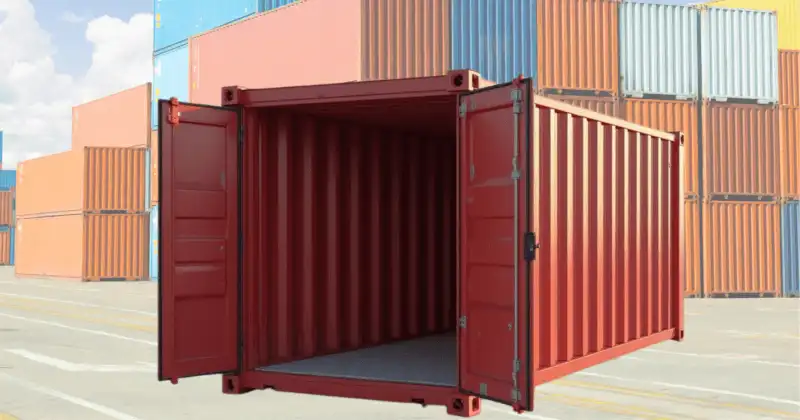
Container size is one of the most consequential decisions a first-time buyer makes, and one of the most commonly rushed. Many buyers default to bigger assuming more is always better, while others underestimate their actual storage volume and end up with a unit that fills up faster than expected.
The right size comes down to four things: what you are storing, how much space your site can realistically accommodate, how the container will be delivered, and what your budget allows. This guide walks through each of those factors so you can make a decision you will not regret six months in.
The Core Difference Between 20ft and 40ft Containers
Standard shipping containers come in two primary lengths: 20 feet and 40 feet. Both share the same exterior width (8ft) and standard height (8ft 6in). The length is the only dimension that changes, but it changes everything about how the container fits on a site, how it gets delivered, and how much it costs.
A 20ft container offers approximately 1,170 cubic feet of interior space. A 40ft container roughly doubles that to around 2,350 cubic feet. In practical terms, a 20ft unit can hold the contents of a two to three bedroom home. A 40ft unit handles significantly more: the equivalent of a large house, a small warehouse floor, or a full construction site equipment inventory.
What the 20ft Container Does Well
The 20ft container is the most versatile option for residential buyers, small businesses, and anyone working with a constrained site. Its smaller footprint makes it easier to position on driveways, side yards, and rural properties where turning radius and ground clearance are limited.
Delivery is also more straightforward. A 20ft container is lighter and easier for a tilt-bed truck to place precisely. On tight sites such as urban properties, sloped lots, or locations with overhead obstructions like power lines and tree branches, the shorter unit gives the driver more options for safe placement.
For buyers storing seasonal equipment, household overflow, small business inventory, or tools and materials for a home renovation, a 20ft container typically covers the need without excess space that goes unused and still has to be paid for.
What the 40ft Container Does Well
The 40ft container earns its place when volume is the priority. Contractors storing heavy equipment, landscaping businesses managing large tool inventories, farmers keeping feed and supplies dry, and buyers consolidating storage from multiple locations tend to outgrow a 20ft unit quickly.
The longer footprint also matters for storing items that cannot be stacked or broken down: long lumber, pipe, conduit, scaffolding, and similar materials that need horizontal space rather than just cubic volume. A 40ft container accommodates these without compromise. A 20ft unit simply cannot.
Per square foot, the 40ft container also tends to offer better value. The price difference between a 20ft and a 40ft unit is rarely double, so buyers who genuinely need the space often find the larger container to be the more efficient purchase.
Site Constraints That Should Drive the Decision
Before settling on a size based on storage needs alone, first-time buyers should assess the delivery site honestly. A container that cannot be placed safely is not useful regardless of its capacity.
The delivery truck needs a clear run to the drop point. Tilt-bed trucks require a straight approach of roughly 60 to 80 feet to set a 40ft container down cleanly. A 20ft container needs considerably less approach distance. If the site has a narrow entrance, a sharp turn, low-hanging branches, or a soft ground surface near the placement area, a 40ft delivery becomes significantly more complicated.
Ground conditions matter too. Both container sizes need a stable, reasonably level base. Compacted gravel, concrete, or railway ties distribute the load well. Soft ground, especially after rain, can cause settling that shifts the container out of level over time, a problem that becomes harder to correct the longer it sits.
High Cube Variants: A Third Dimension to Consider
Both 20ft and 40ft containers are also available in high cube configurations, which add approximately one foot of interior height, bringing the ceiling from the standard 8ft 6in up to 9ft 6in. This extra headroom is largely irrelevant for stacked box storage but becomes significant for tall equipment, racking systems, or any interior conversion.
Buyers planning to add shelving, build out a workshop, or store vehicles or machinery with vertical clearance requirements should factor this in. A 40ft high cube container is a common choice for buyers who want both maximum floor space and interior flexibility, particularly if the container will be modified or occupied in any way.
High cube units are slightly taller on the exterior as well, which can matter on sites with height restrictions or overhead clearance concerns during delivery.
Budget Considerations by Size
Cost varies by condition (new vs. used), location, and market demand, but the size relationship is consistent: 40ft containers cost more than 20ft containers, though rarely by a factor of two. The delivery cost also tends to be similar between the two sizes since the logistics involved are comparable, which means the per-cubic-foot cost of a 40ft unit is usually lower.
Buyers on a strict budget who need maximum storage volume often find that a used 40ft container represents better value than a new 20ft unit. Buyers who prioritize ease of placement, site flexibility, or lower upfront cost will generally find the 20ft unit the more sensible starting point.
How to Estimate Your Storage Needs Before Deciding
A rough inventory exercise helps avoid over- or under-buying. Walk through whatever you plan to store and estimate the volume honestly. Standard household moves are often described in terms of truckload capacity: a typical 26ft moving truck holds around 1,800 cubic feet, which sits between the two container sizes.
For tools and equipment, think in terms of floor space rather than cubic feet. A riding lawnmower, a compact tractor, or a small skid steer each claim significant floor area that stacked goods do not. If floor-mounted equipment is part of the equation, the 40ft container’s extra length is often the deciding factor.
When uncertain, most experienced buyers lean toward the larger size. Running out of space in a container you own is more disruptive than having a modest surplus. Containers do not expand, but storage needs almost always do.
Common Mistakes First-Time Buyers Make Around Size
- Choosing size based on price alone. Buying a 20ft container to save money and then renting additional storage elsewhere typically costs more over time than buying the right size upfront.
- Not checking site access before ordering. A 40ft container that cannot be delivered cleanly creates real problems on the day of arrival. Confirm delivery requirements with the supplier before committing.
- Forgetting to account for aisle space. A container filled wall-to-wall with no room to move is difficult to use. Factor in working space when estimating how much storage you actually need.
- Assuming a second container can be added easily later. Two containers side by side require more site space and more planning than buyers typically anticipate. It is easier to get the right size once than to reconfigure later.
Making the Call
For most first-time buyers with standard storage needs and a typical residential or semi-rural site, a 20ft container is the right starting point. It is manageable, affordable, and fits the majority of use cases without overcomplicating delivery or site preparation.
For buyers with larger inventories, longer items to store, or plans to grow into the space, the 40ft container is the more practical long-term investment. The modest price premium is almost always recovered in utility.
Define what you are storing, measure your site access, and let the actual requirements drive the decision. Container size should solve a problem, not create a new one.
Frequently Asked QuestionsCan I fit a car inside a shipping container?
Yes. A standard sedan fits inside a 20ft container with some clearance, while a 40ft container can accommodate two average-sized vehicles. Larger trucks or SUVs may require a high cube variant for comfortable loading and unloading.
Is a 40ft container harder to deliver than a 20ft?
Yes, in most cases. The longer unit requires more approach distance and a larger turning radius for the delivery truck. Sites with narrow driveways, tight corners, or overhead obstructions are better suited to a 20ft container.
Do both sizes come in new and used condition?
Yes. Both 20ft and 40ft containers are available as new one-trip units and as used cargo-worthy containers. The condition choice is independent of the size choice and depends on your budget, intended use, and how much cosmetic quality matters for your application.
What is the interior floor space of each size?
A standard 20ft container has approximately 150 square feet of floor space. A standard 40ft container offers around 300 square feet. High cube versions of both share the same footprint but gain roughly one additional foot of ceiling height.


More Stories
Revolutionizing Driving: The Future of Automotive Systems Unveiled
The Future of Automotive Systems: Driving Innovation Beyond the Dashboard
The Future of Automotive Systems: Driving Innovation in an Autonomous World